

Paint and Painting

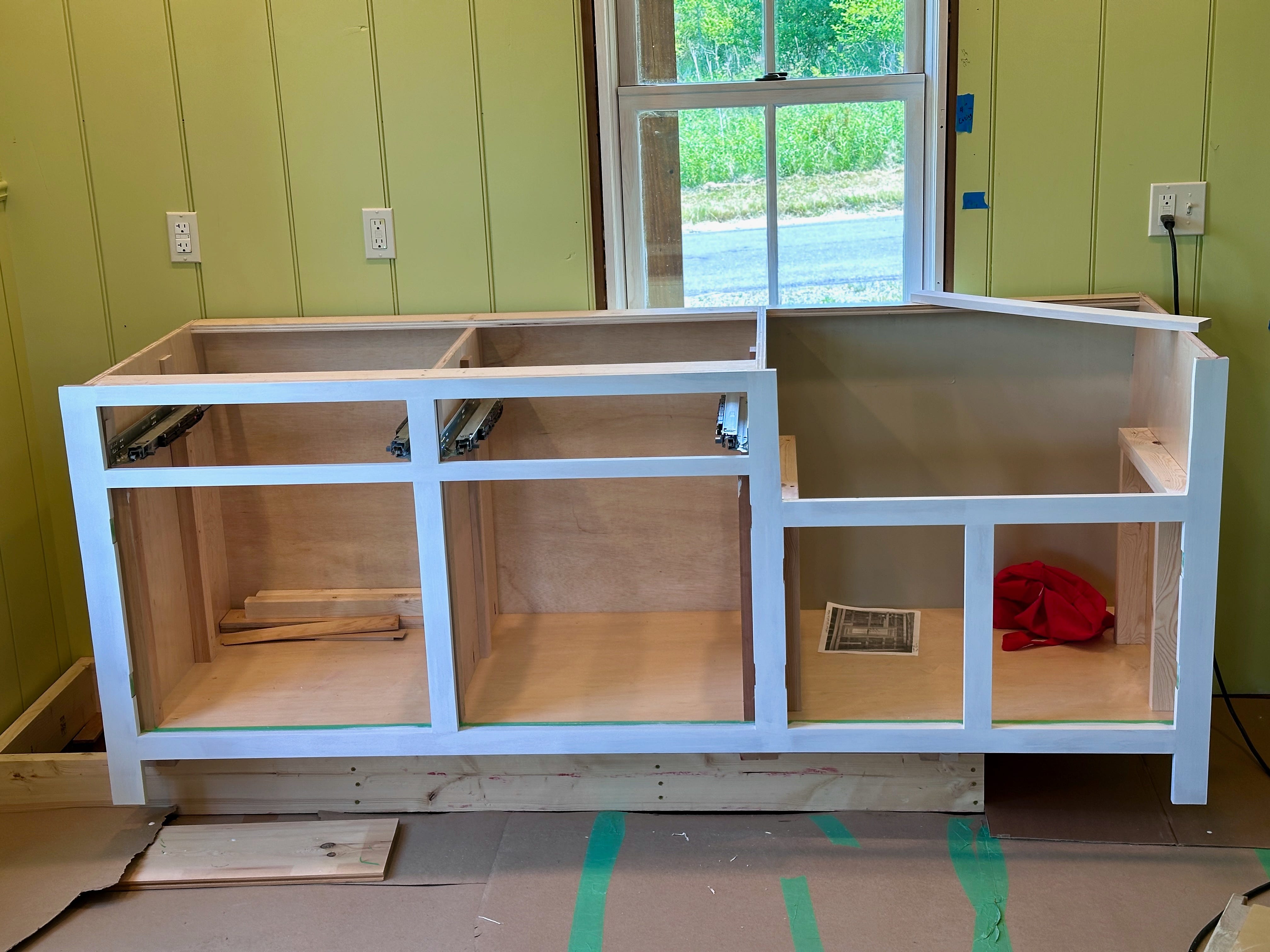
A friend was visiting over the weekend and stopped by 151 to see the progress. I was painting kitchen cabinets. She asked me outright, do you like painting? I surprised myself by answering unequivocally, yes.
Just a few minutes before I’d been grumbling to myself about how the painting was going. My favorite, go-to brush didn’t seem to be quite right for the job, meaning the new paint I was using on the cabinets wasn’t going on as smoothly as I’d expected. I experimented with some other brushes, and none were quite what I was looking for, and I now had a bucket full of used brushes and a surface that was lacking. But grumbling is simply the weather in the work and is, especially in this case, not to be confused with me not liking to paint, for I do.
I went on from my yes to say to our friend, this surface wasn’t this way a moment ago. What I love about painting is how it rides the edge of newness. Painting provides a path to a fresh presence in a room. Painting conveys a language of its own. There are many voices that make a space what it is becoming and paint is one of them. I didn’t always think this way. I painted my first house the same off-white in every room, like paint should be barely seen and certainly not heard.
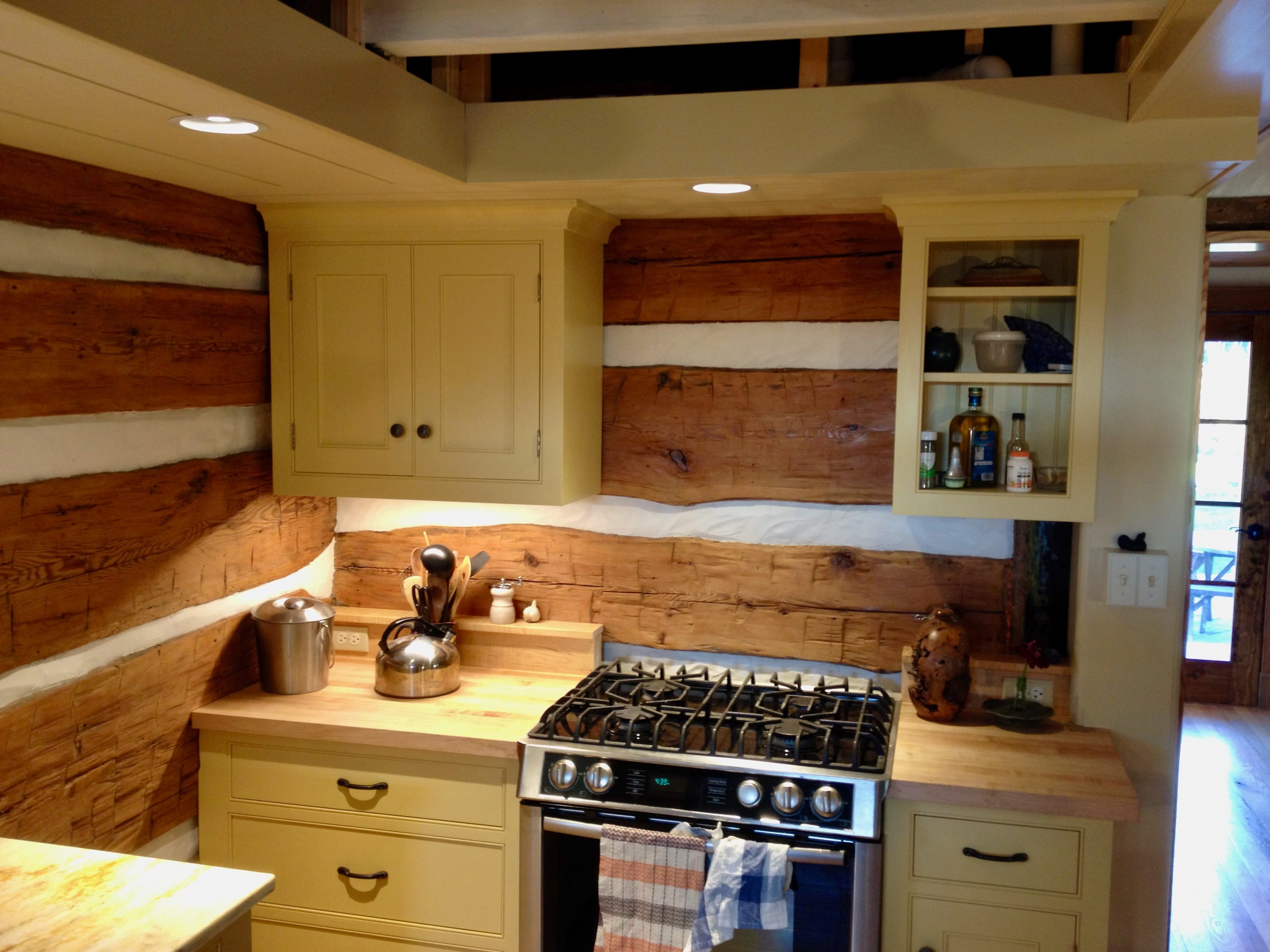
I painted the painted portion of our kitchen cabinets at the homestead over twelve years ago. They still look fresh, though some of the corners could use a deep cleaning. The surfaces of those cabinets are engaged and touched multiple times every day. They are the visual and tactile anchors in the kitchen.
I paint with a brush because I like seeing the mark of hand work. If I had wanted perfectly smooth cabinet surfaces, I would have bought pre-finished cabinets that are sprayed. No chance of confusing my brushed surfaces with sprayed ones.
This time around I did experiment with using a four-inch roller in combination with a brush. I’d roll on some paint which would leave an even surface and then lightly feather it with a brush. Using rollers seems to be all the rage in painting circles right now, and there are foam rollers, knit rollers and mohair rollers, to name just a few, but I didn’t like them with this paint. Even when rolling a very small surface, by the time I got the brush to it, my strokes were pulling the paint more than I like.
Things went better when I got to the second finish coat. I sanded everything after the first coat with 320 grit and the second coat went on more smoothly over itself than over the primed surface. And I finally settled on a brush, which clearly had the tag, least likely to succeed written all over it when I bought it at the paint store.
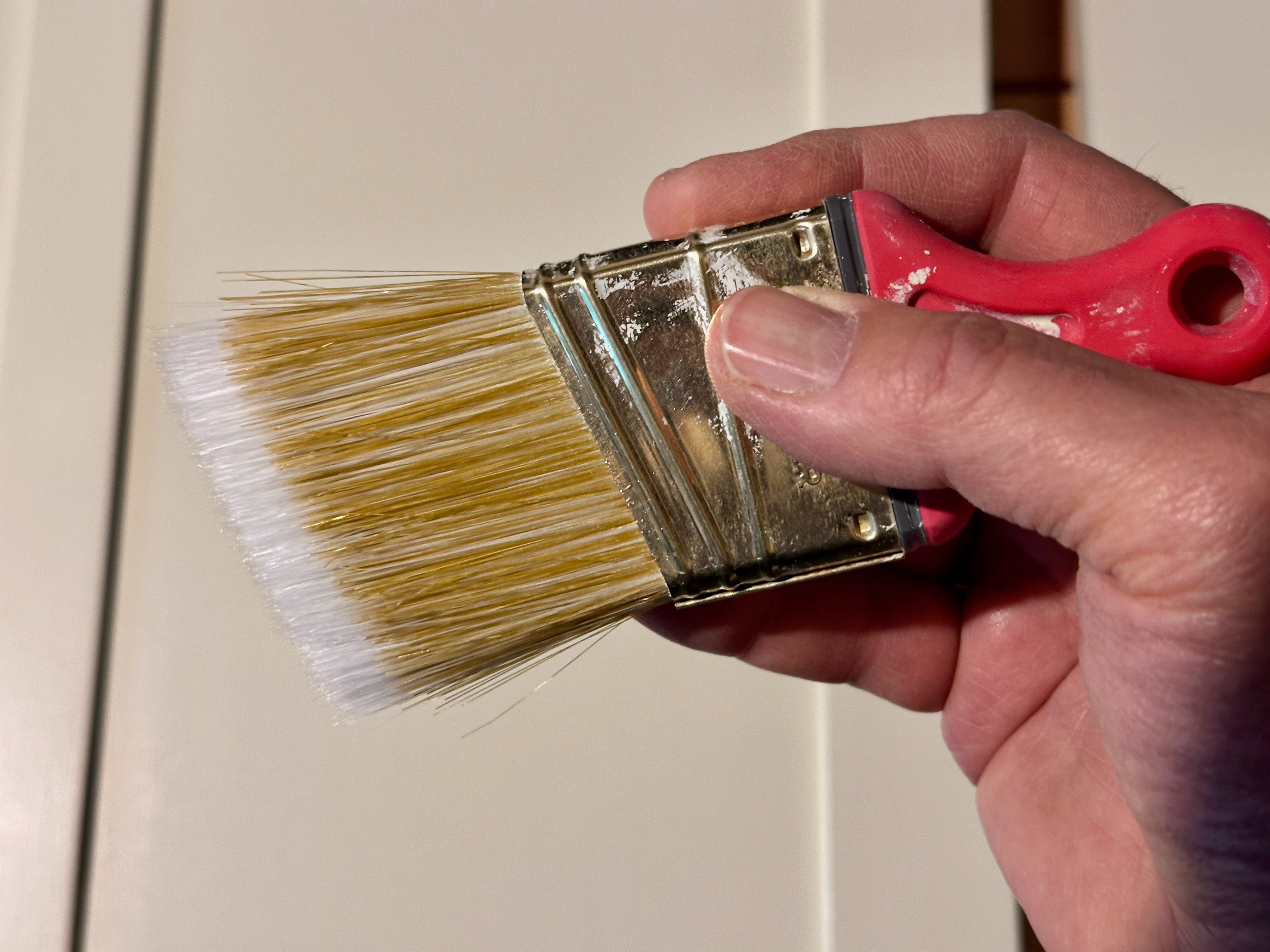
It is the shortest brush I have, with a bendable stubby handle. I bought it to paint the inside edges around the drawer openings which are pretty tight. But I found it allowed me to feather that thin coat into the even pattern of marks that I like.
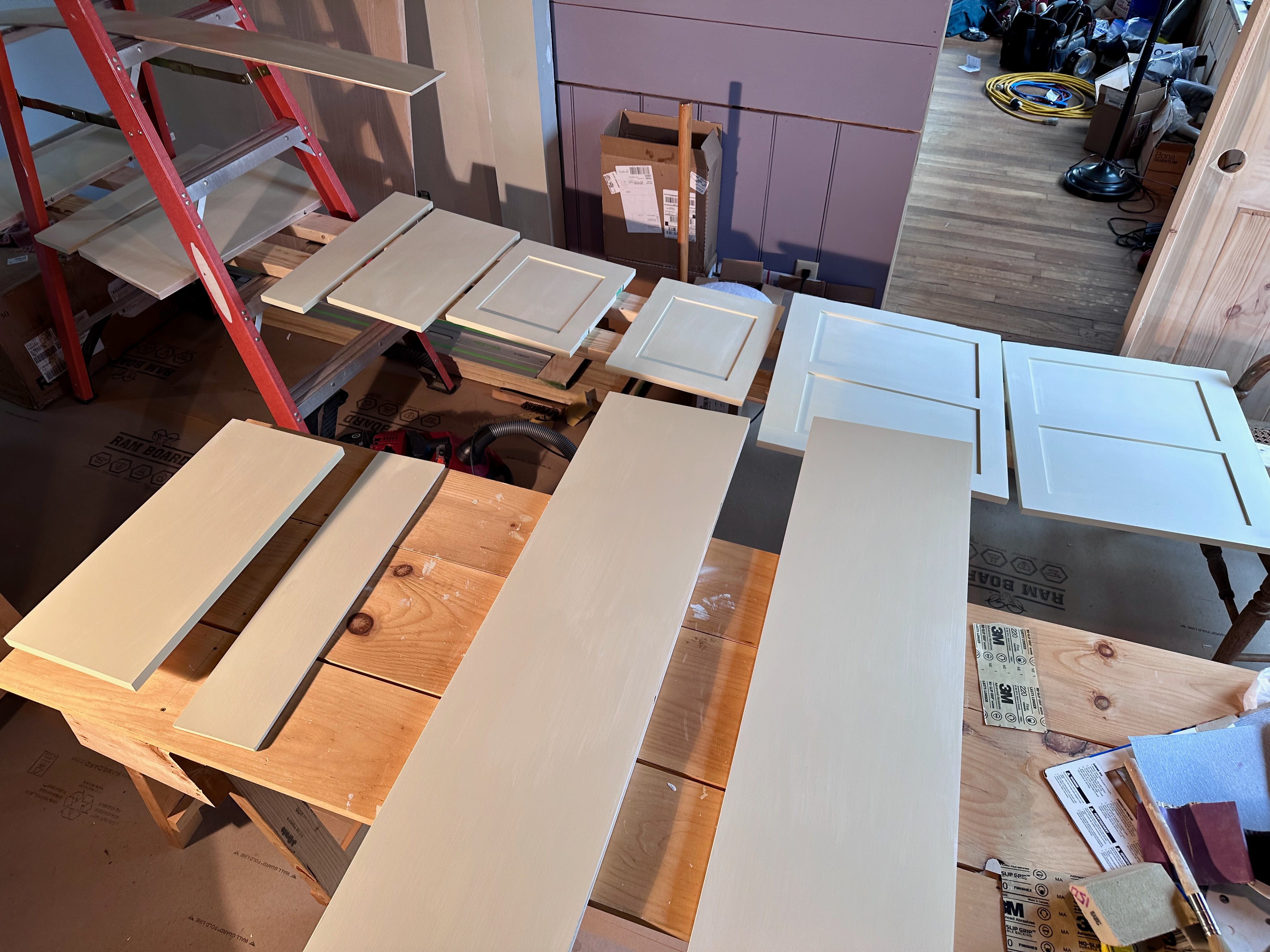
There were lots of surfaces to practice on. In addition to the four cabinet carcasses, there are five drawer fronts, four cabinet doors that get painted on both sides, four shelf boards painted on both sides for the open shelf cabinets, and toe kick trim boards.
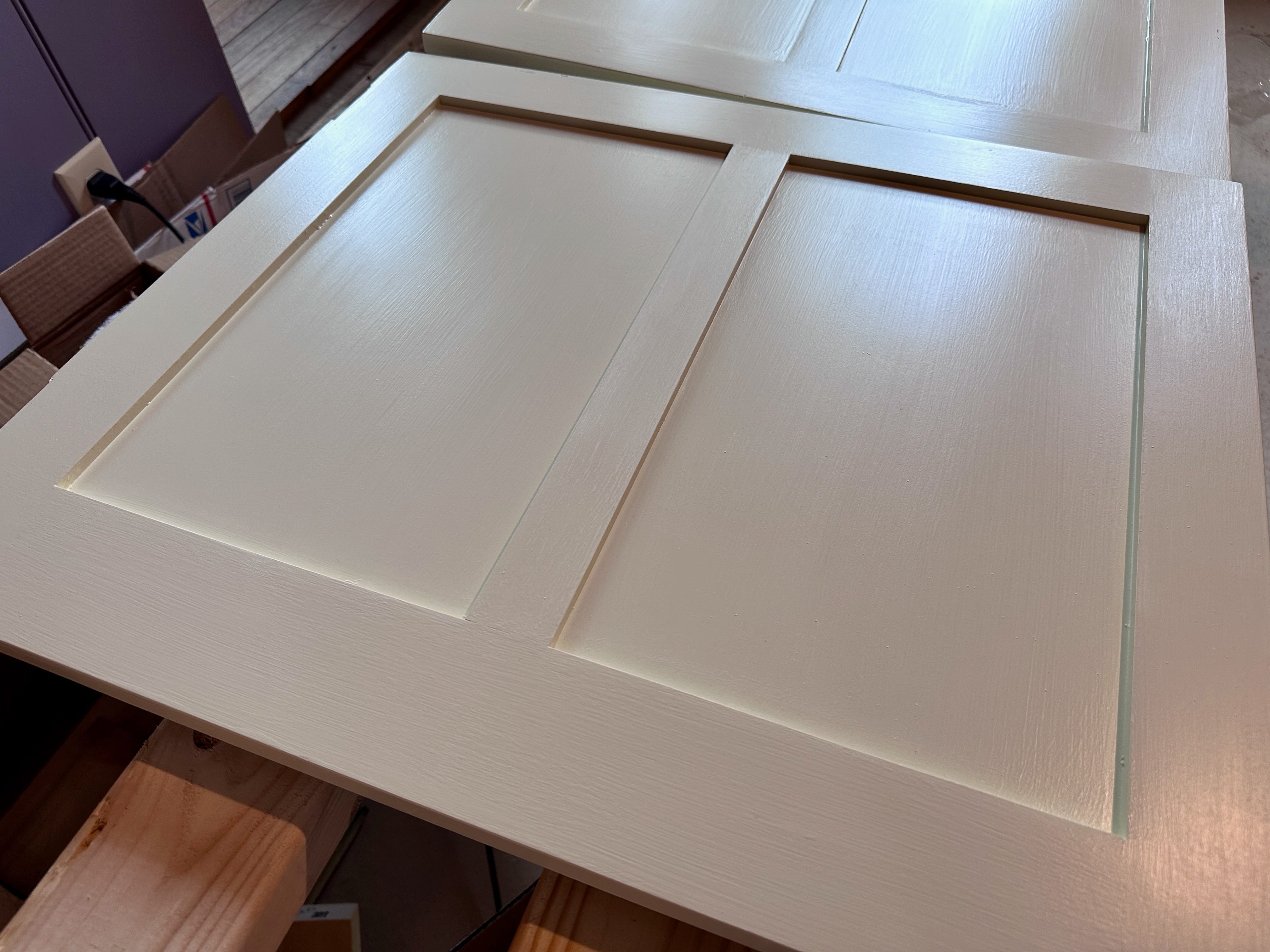
On a long project like 151, the painting stage is really where things take a big step forward. In the span of a few hours painting moves the needle in a space. One board, one surface at a time, newness comes. Painting is infinitely optimistic and in this long span of work, that optimism is precious.
Love and Peace, Glenn
That is a lot of painting. You do such good work.